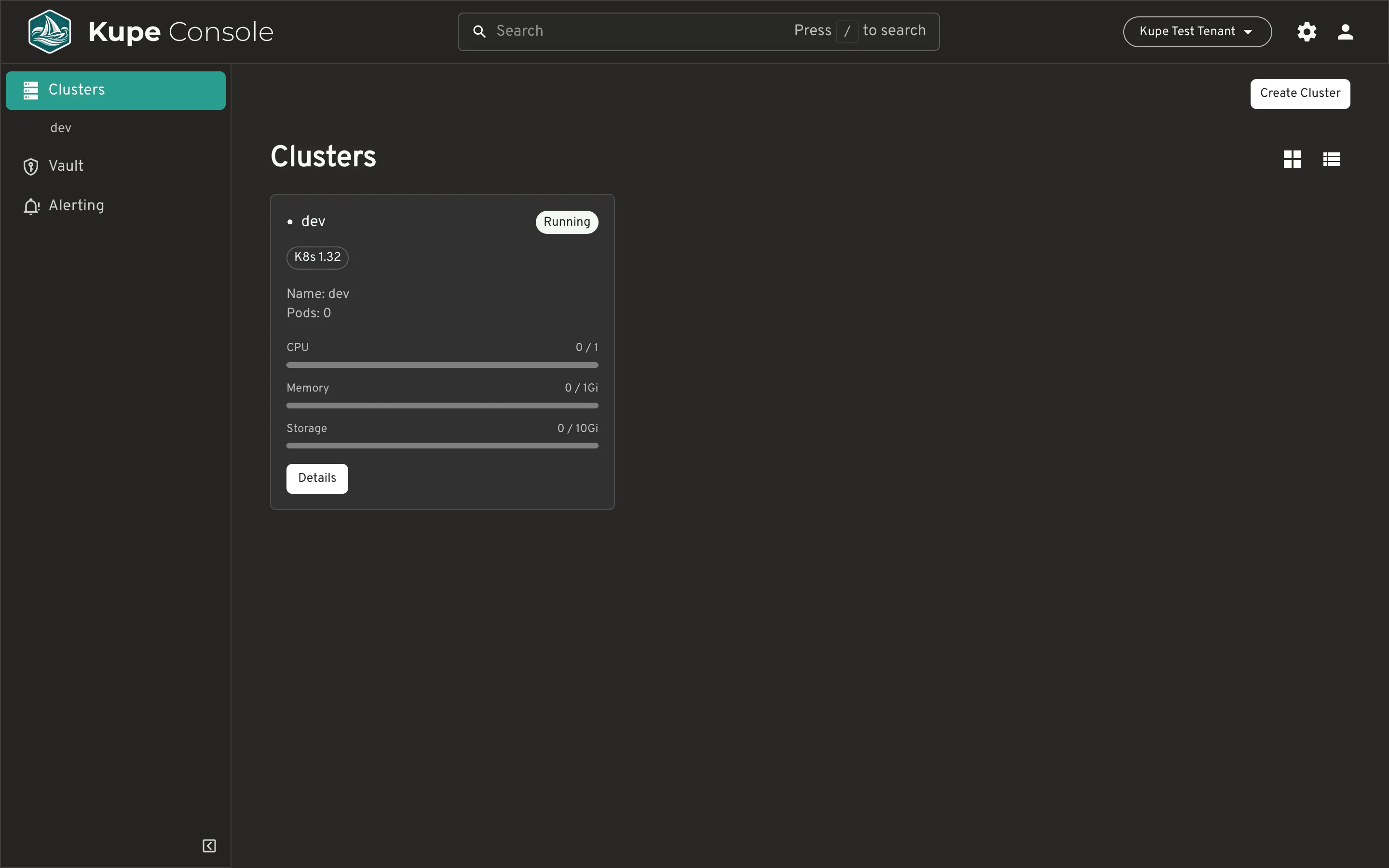
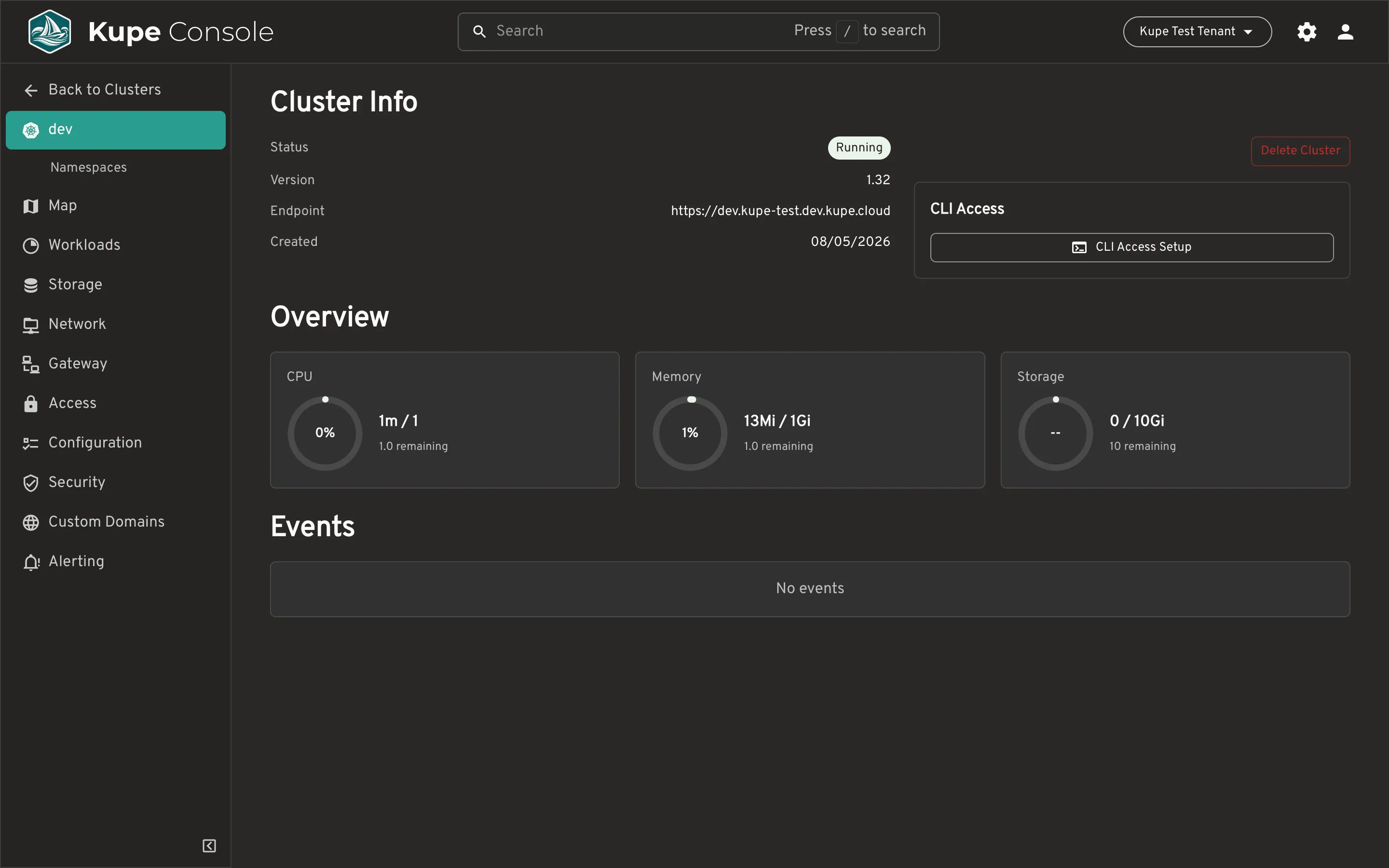
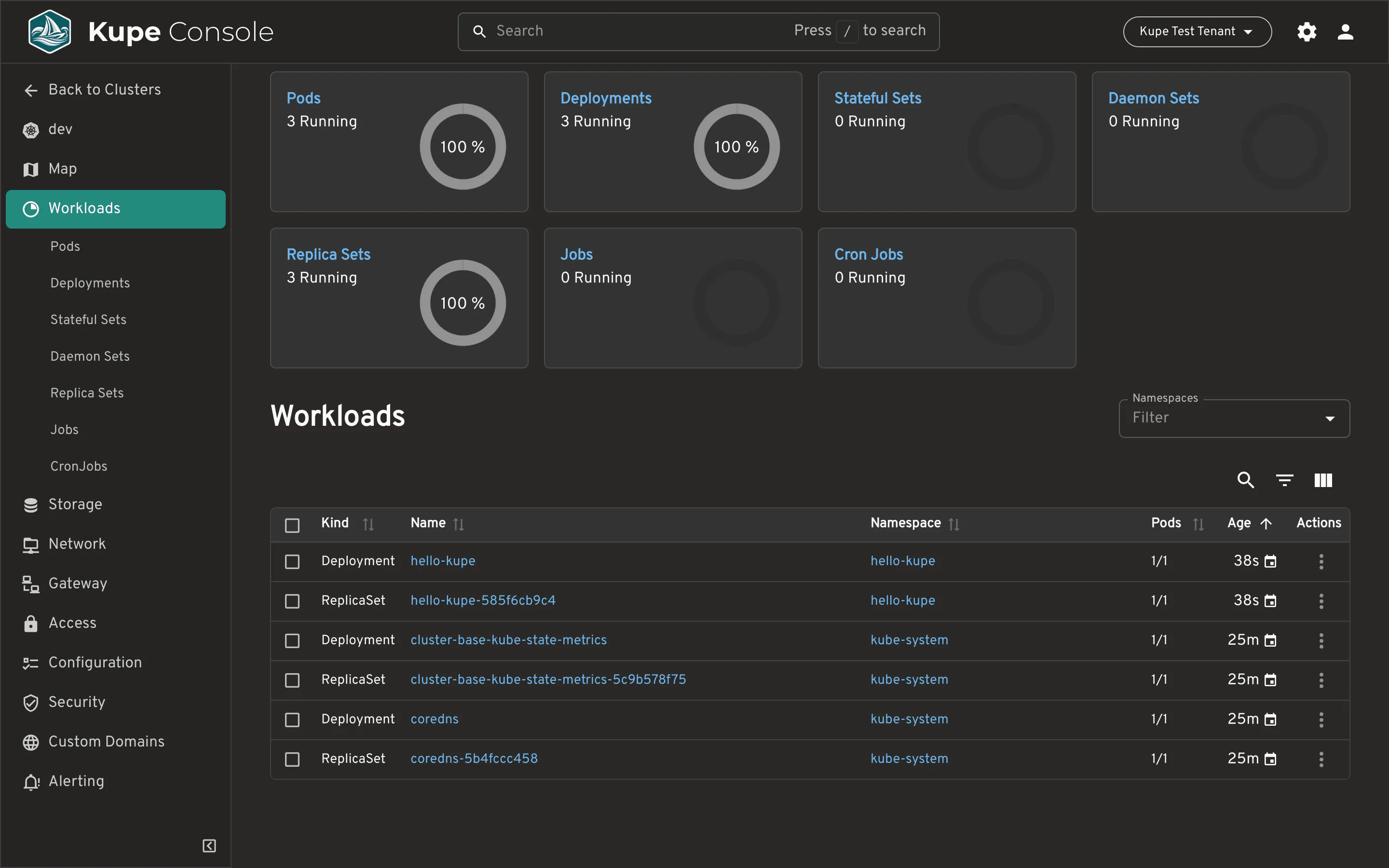
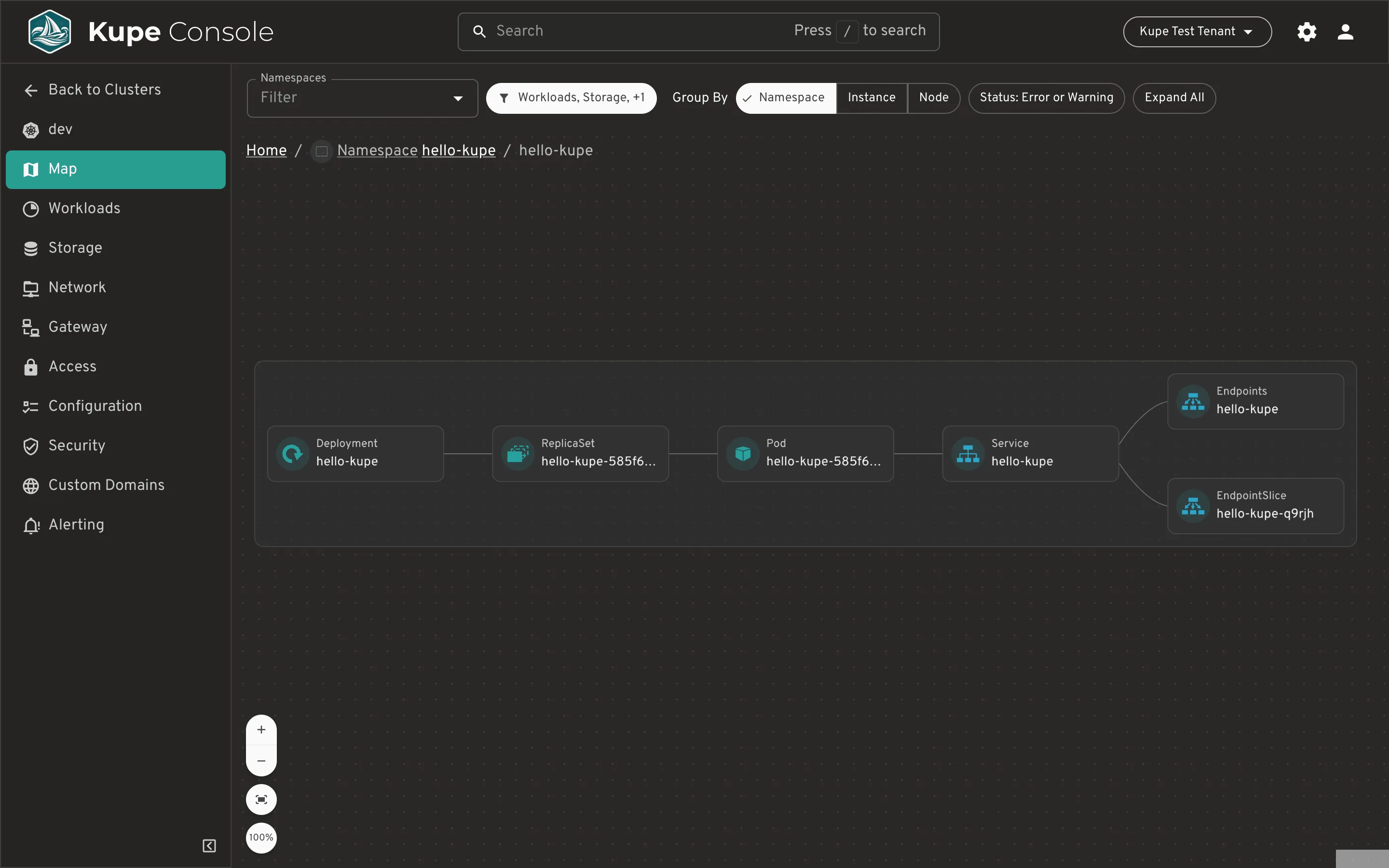
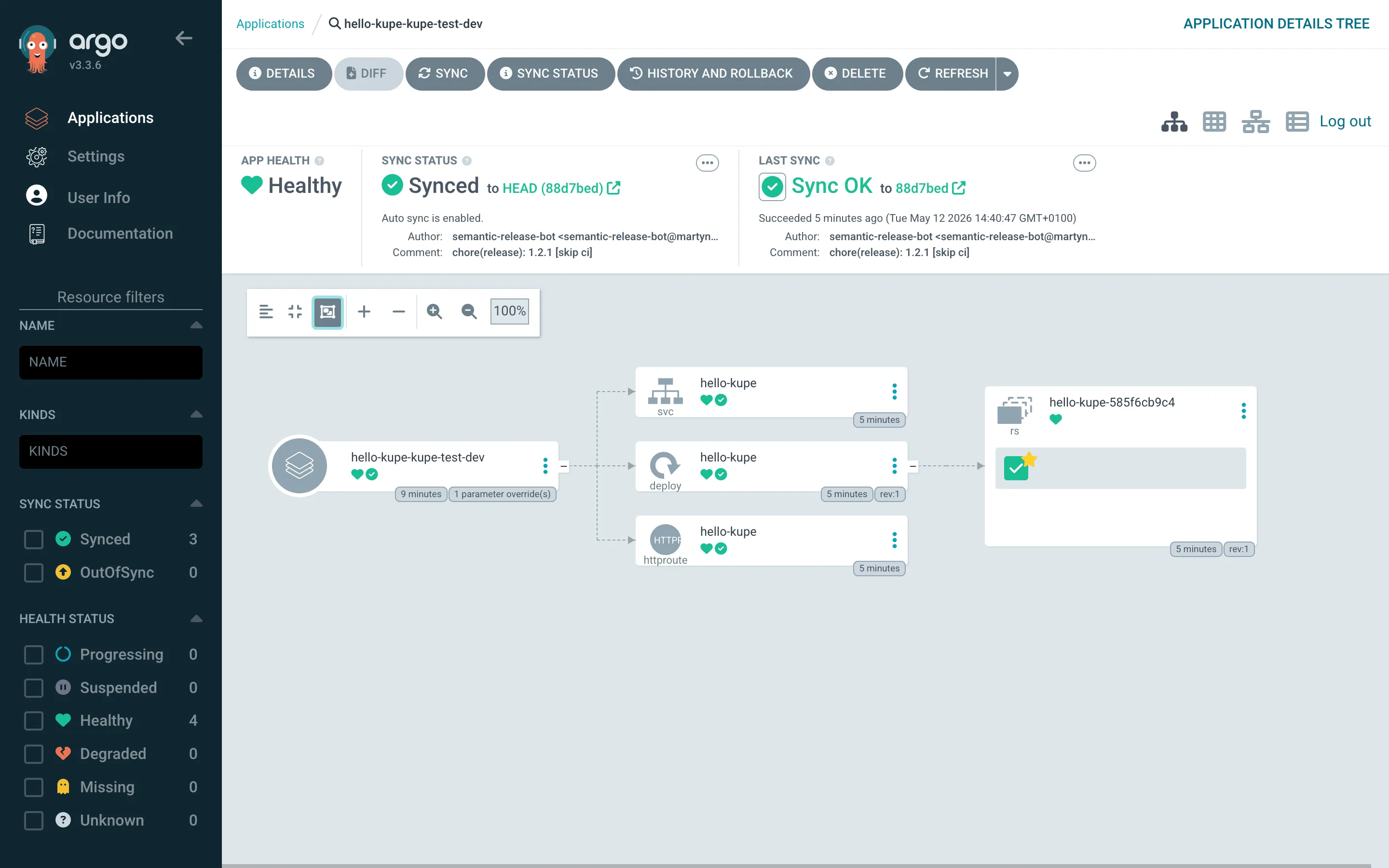
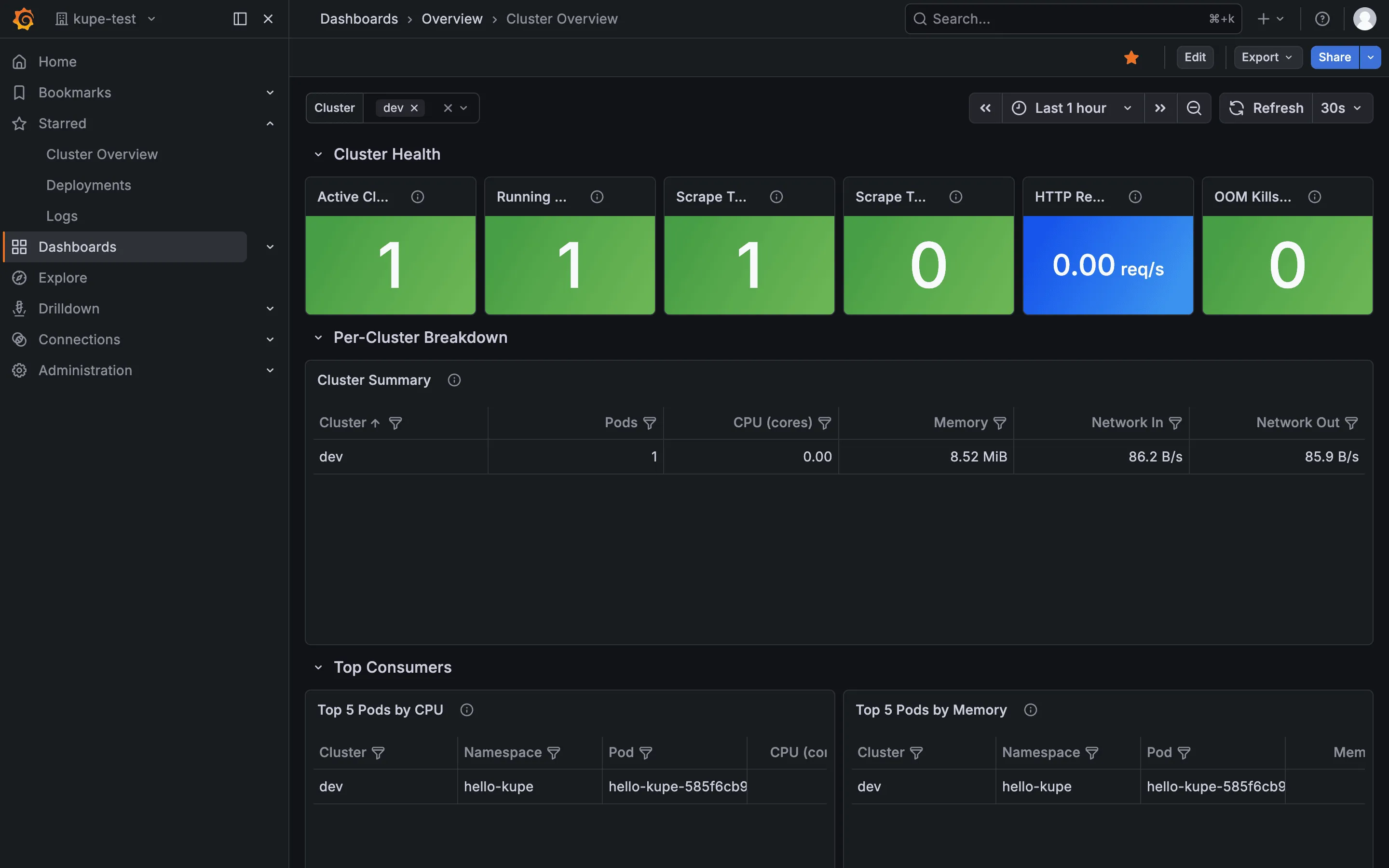
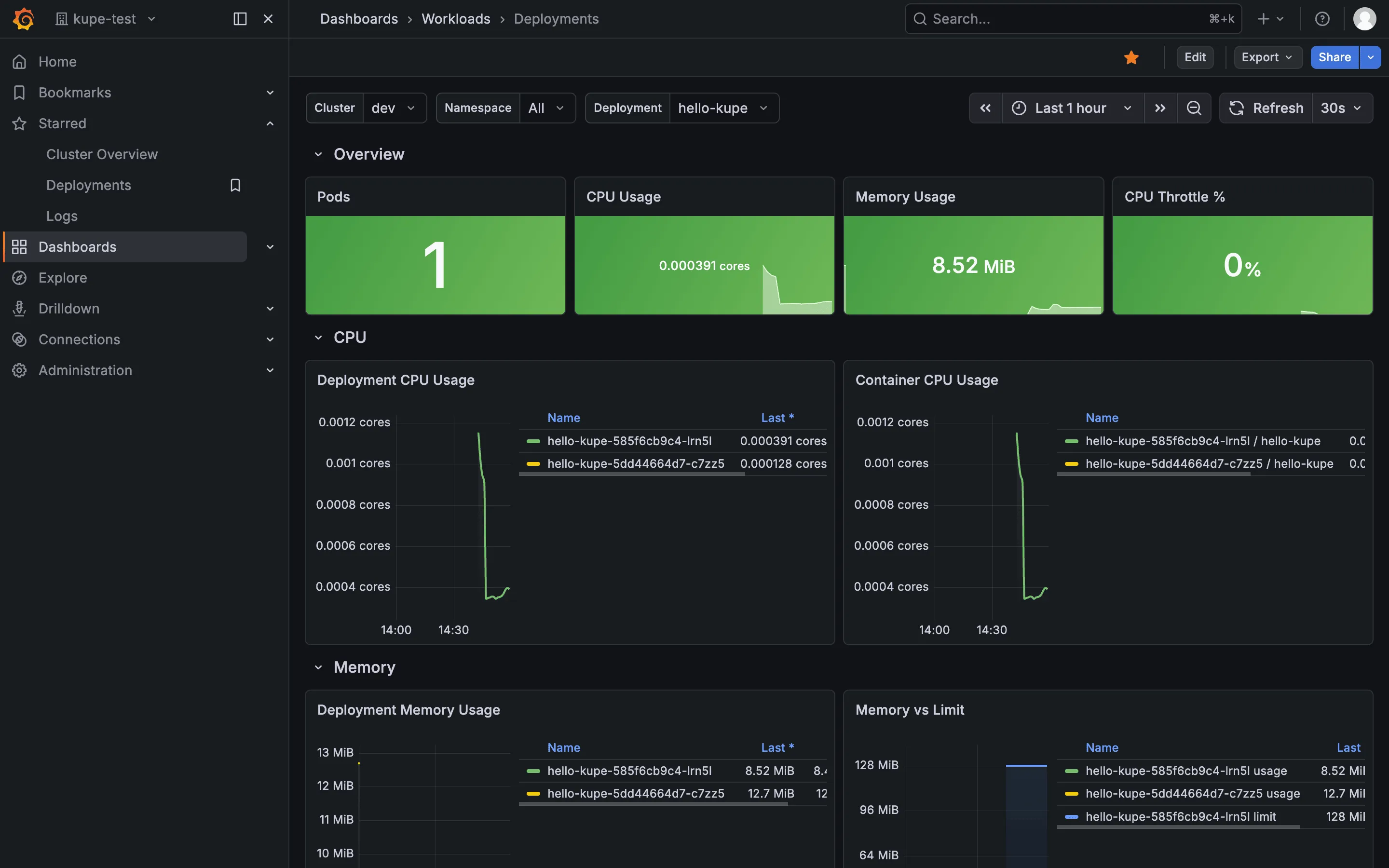
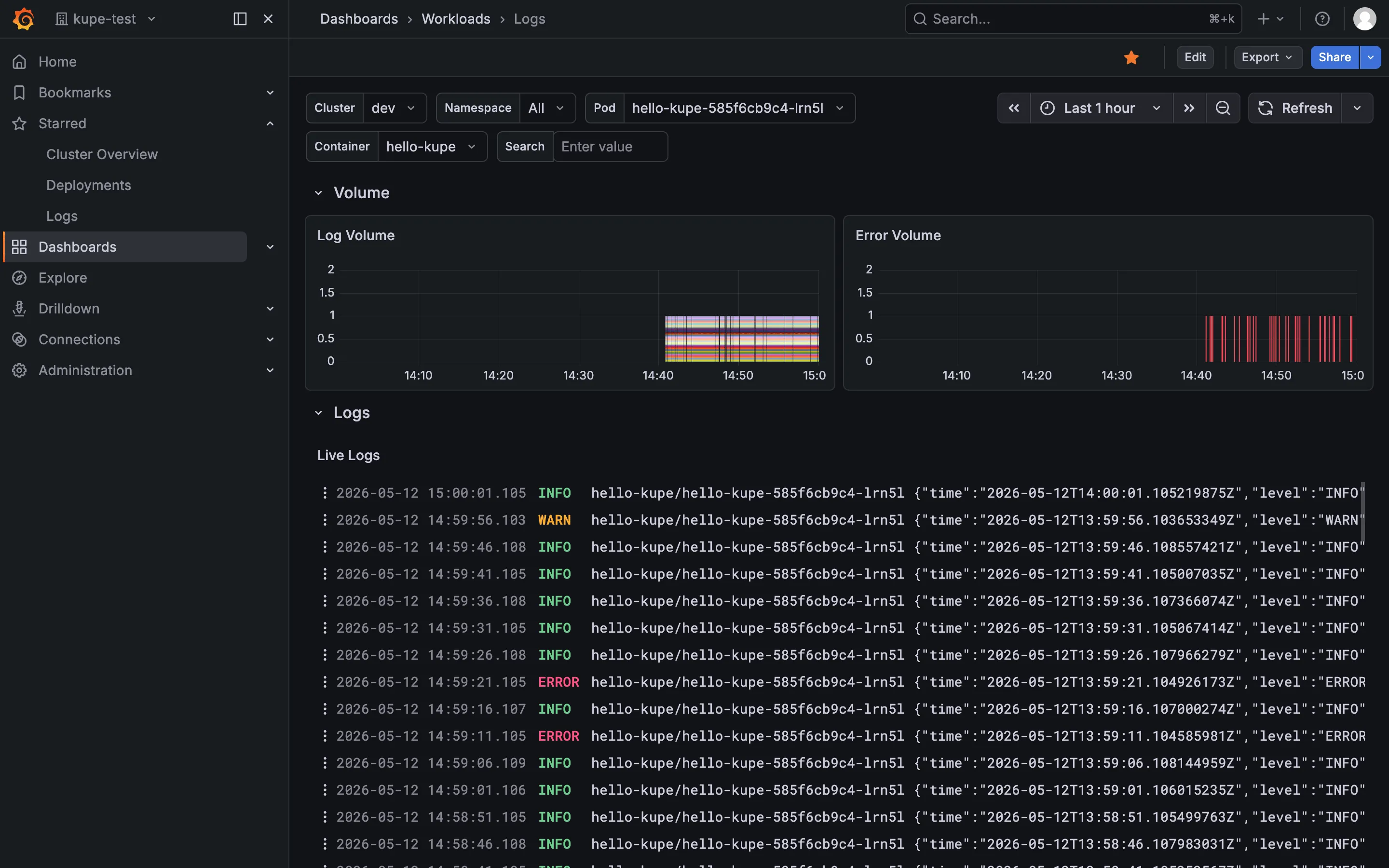
The fully assembled Kubernetes platform.

Managed Kubernetes with GitOps, observability, and security built in.

One command provisions a managed cluster — control plane, observability, GitOps, and policies wired in.

~/acme — kupe cli
kupe auth login ✓ Logged in as you@acme.com kupe cluster create dev --cpu-limit 2 --memory-limit 8Gi --storage-limit 50Gi ✓ cluster dev ready Name: dev Display Name: dev Type: shared Version: 1.32 (running 1.32.3) Phase: Running Endpoint: https://dev.acme.kupe.cloud CPU: 2 Memory: 8Gi Storage: 50Gi Created: {CREATED_ISO} (0s ago) kupe cluster kubeconfig dev --merge ✓ Merged into ~/.kube/config — context kupe-acme-dev cat hello-kupe-app.yaml apiVersion: argoproj.io/v1alpha1 kind: Application metadata: name: hello-kupe namespace: argocd spec: project: acme source: repoURL: https://github.com/kupecloud/hello-kupe.git path: chart helm: parameters: - name: tenant value: acme destination: name: acme-dev namespace: hello-kupe syncPolicy: automated: {} syncOptions: - CreateNamespace=true kubectl apply -f hello-kupe-app.yaml application.argoproj.io/hello-kupe created
Auto-tour. Click anywhere to take over. Real screenshots for each surface. Times are compressed for display purposes.

Our Platform

Managed clusters. Full control.

Kupe runs the platform layers. Your team works with clusters, apps, and the Kubernetes interfaces you already know.

Managed clusters

Your team gets full admin access and standard Kubernetes interfaces.

Own API server

Every cluster has its own Kubernetes API.

Full admin access

Operate clusters directly when needed.

kubectl and Helm

Use standard Kubernetes tooling.

Default alerts

Ready for crash loops, pending pods, and storage pressure.

HTTP Routes

Define ingress with Kubernetes HTTPRoute resources.

Custom metrics and alerts

Extend with custom metrics and PrometheusRule resources.

Tenant Services

Shared once per organisation and available across every managed cluster.

Grafana organisation

Dashboards across every managed cluster.

Central metrics

Default metrics scraped automatically.

Central logs

Logs sent to Loki by default.

Argo project

Deploy to all clusters when you want GitOps.

Cilium Gateway

Tenant ingress layer for HTTP routes.

Custom dashboards

Build and share Grafana views for your teams.

Tenant boundary

Kupe manages the complexity below. Your team works at the cluster and application layer above.

Managed services layer

Services deployed onto the platform, maintained and upgraded by us.

ArgoCD

Powerful GitOps engine.

Grafana

Default and custom dashboards.

Mimir

Central metrics storage.

Loki

Central log aggregation.

Alertmanager

Alert receivers and routes.

OpenBao

Managed secrets backend.

Kyverno

Policy enforcement at admission.

Tetragon

Runtime threat detection.

Trivy

Vulnerability and compliance scanning.

Kubernetes foundation

The base layer that Kupe operates so teams do not have to build or maintain it themselves.

API server

Managed Kubernetes control surface.

Scheduler

Places workloads onto nodes.

Controllers

Keeps desired state in sync.

etcd

Stores cluster state safely.

Cilium networking

Cluster networking and policy.

Load balancers

Public entry points for traffic.

Autoscaling nodes

Compute instances scale with demand.

Security

Security paths built into the platform.

Admission policies, image scanning, network isolation, secrets, tenancy, and runtime signals should be visible without turning first use into a security project.

Cluster policies

Admission-time guardrails for risky workload patterns such as privileged pods and host mounts.

Image scanning

Vulnerabilities, misconfigurations, and exposed secrets should be visible where teams already work.

Network isolation

Tenant boundaries, cluster access, and platform internals need to stay clear from day one.

Runtime protection

Runtime signals should help teams spot suspicious activity without asking them to assemble their own detection stack first.

Platform Journey

From cluster to working platform loop.

Kupe is designed around the path teams actually need: create a cluster, deploy a workload, inspect the signals, and keep enough control to use the Kubernetes tools they already know.

01

Create your cluster

Use an access code, create a tenant, and launch a managed cluster through Kupe.

02

Deploy the way you want

Use kubectl, Helm, or ArgoCD without learning a proprietary deployment model.

03

Observe and extend

Check logs, metrics, dashboards, alerts, and routing, then extend the platform with the tools your team already uses.

Request access to Kupe Cloud.

If you have an access code, use it to create your account. If you want access, drop us a line and we'll get one sent out as soon as we can!

Request access